Homeschool co-ops form in August, which makes this the week the decision is live in thousands of kitchens. The search results tell you how loaded the decision is: half the top videos on co-ops are warnings, quit stories and reasons-not-to lists, written by families who joined the wrong one first.
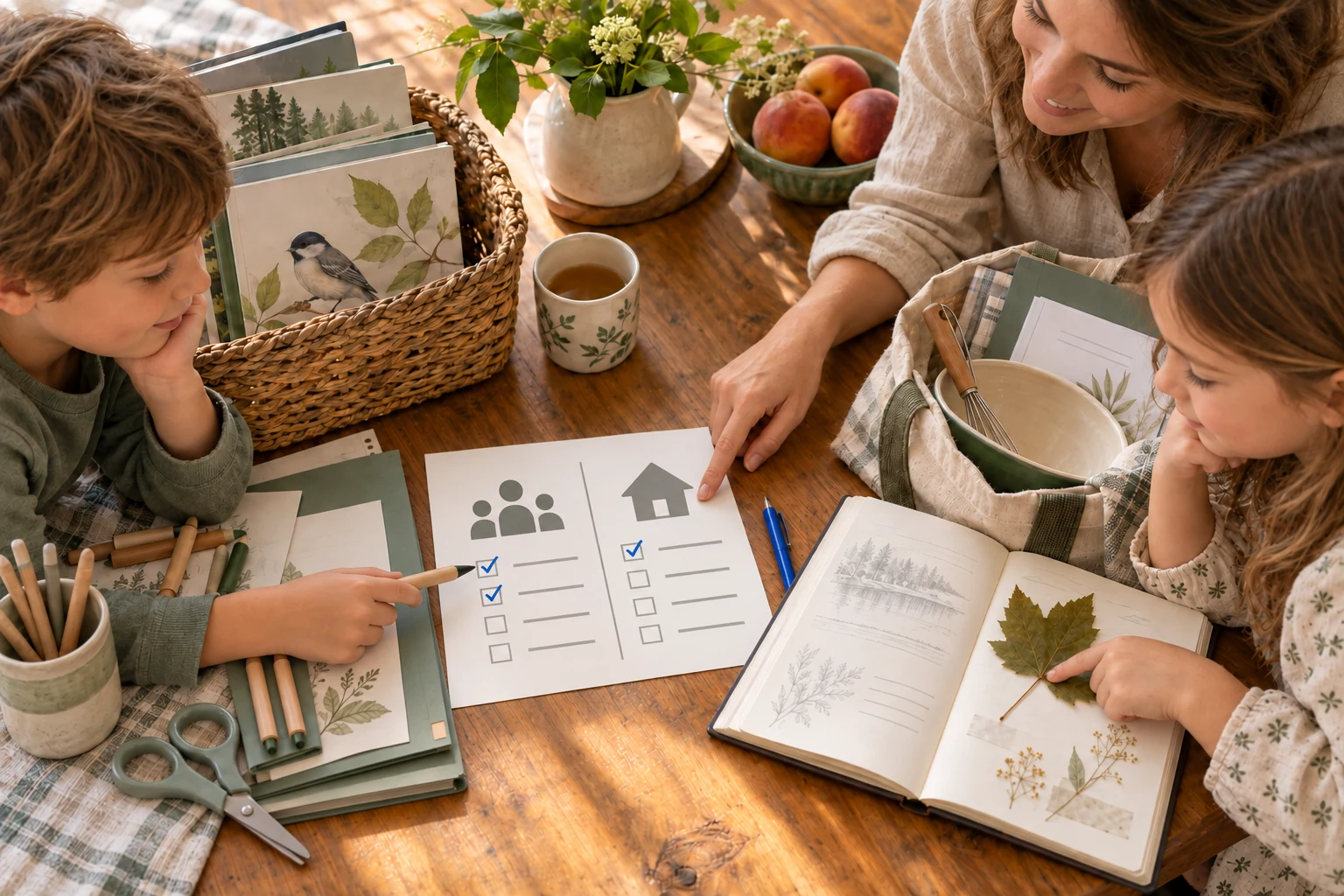
That ambivalence is information. A good co-op solves homeschooling's two hardest problems, community and the subjects you'd rather not teach solo. A bad one, as the niche's own vetting guides put it, "can undo months of work in your homeschool," and the damage arrives quietly: "more tired, less effective, and slightly out of control."
Vet the Co-op Like the Commitment It Is
The red-flags rundown that leads the search results comes from a homeschool parent's years inside co-ops, and the strongest of its eight warnings share one theme: structure.
No clear leadership or decision authority is flag one, the co-op run by committee where nothing can be decided. A "vague or contradictory philosophy," the group whose pitch is we'll take anybody, predicts conflict later, because Charlotte Mason families and rigorous-classical families want different Tuesdays. Discipline that's avoided or outsourced means your kid absorbs the loudest child's norms. Academics that are "casual, inconsistent, or performative," the rundown's phrase is "projects with no mastery," cost you the subject you joined to cover. And the sharpest one: a co-op that competes with the home. "You don't want your children working harder for other teachers than they'll work for you."
Ask about leadership, philosophy, discipline and workload before you commit a year. Any co-op offended by those questions has answered them.
| Option | What it is | Best for | Skip if |
|---|---|---|---|
| A national network | Structured program, set curriculum, fees (Classical Conversations is the biggest name here) | Families who want the decisions made | Your method clashes with theirs, structure wins every tie |
| A local independent co-op | Parent-run, one day a week, everyone teaches | Community plus the subjects you dread | The red flags above showed up on the visit |
| Starting your own | Total control, real work | Three families you already trust and a gap no local co-op fills | You're patching loneliness, start with park days first |
| No co-op | Full independence | Families whose kids connect through sports, church or neighbors | The isolation is real, then reconsider small |
The Membership Fee Is a Class You Teach
Most independent co-ops run on parent labor: join, and you're teaching something by October. That's the part our generators quietly carry.
- The Co-Op Class Proposal Generator turns "I could maybe teach baking" into a syllabus with weekly topics, the artifact co-op coordinators ask for.
- The Homeschool Supply List Generator builds the per-class materials list, which separates a smooth Tuesday from a frantic Monday night.
- The Literature-Based Unit Study Generator designs the whole-book classes co-ops love, and the Book List by Grade Generator stocks it for a mixed-age room. For the discussion half of a book class, our book club discussion questions guide covers questions that keep a room talking.
Your Method Should Survive the Co-op
The philosophy clash in flag two cuts both ways: the co-op should know its method, and so should you. Each major method has its own planning toolkit here.
- Charlotte Mason families get the Charlotte Mason Homeschool Planner and the Narration Prompt Generator, since narration is the method's engine.
- Unschoolers get the Unschooling Interest Tracker, which turns follow-the-child into a record you can stand behind (what your state wants on record is in our homeschool state requirements guide), and families fresh out of conventional school get the Deschooling Transition Plan Generator for the adjustment months.
- The Montessori Activity Planner covers the prepared-environment crowd, and the Morning Basket Planner builds the gathered start-of-day ritual that works across every method.
Enrichment Is What the Other Four Days Are For
Co-op day is one day, and our homeschool schedule guide covers how to build the rest of the week around it. The Homeschool Nature Study Generator plans the outdoor observation work that anchors many homeschool weeks, the Field Trip Portfolio Entry Generator turns outings into documented learning, and the Gifted Enrichment Plan Generator stretches the kid who finished the curriculum in February. For high schoolers, those records feed the transcript, which our homeschool diploma and transcript guide walks through.
The Dock Editor holds the co-op syllabus, the supply lists and the portfolio entries in one place per child, with a free trial long enough for the whole setup sprint.
If the co-op decision is live in your kitchen right now, do the vetting visit with the red-flag questions written down, and draft your class proposal before you're asked. Joining prepared beats joining hopeful. The whole homeschool toolkit, records and diplomas included, sits in the education prompt library.