A works cited page is the alphabetical list of every source you quoted or referenced, in MLA format, on its own page at the end of your paper. One entry per source, hanging indent, double-spaced. That's the whole thing.
Two notes before the format. "Works Cited" is the MLA term. If your class uses APA, you want a References page instead, and the rules differ. And a works cited page lists only sources you cited in the paper, not everything you read. That second one is a bibliography, which is different.
MLA 9th edition builds every entry from the same nine core elements, in the same order (MLA Style Center). Learn the order once and you can cite anything, including sources no template covers.
The Nine Core Elements (In Order)
Every MLA entry follows this sequence. Skip the ones a source doesn't have.
- Author. Last name, First name.
- Title of source. The article, chapter, or video title, in quotation marks.
- Title of container. The larger work it sits in (the website, journal, or book), in italics.
- Other contributors. Editor, translator, director.
- Version. Edition number.
- Number. Volume and issue.
- Publisher.
- Publication date.
- Location. Page numbers, URL, or DOI.
The container idea is the part people miss. An article is the source. The website it lives on is the container. A poem is the source. The anthology is the container. Get that relationship right and MLA stops feeling like a maze.
What Each Entry Looks Like
A book
Kolbert, Elizabeth. The Sixth Extinction: An Unnatural History. Henry Holt, 2014.
Author, title of source in italics because the book is its own container, publisher, date. No URL for a print book.
A website article
Ruiz, Rebecca. "How to Spot a Deepfake." Mashable, 12 Mar. 2025, mashable.com/article/how-to-spot-deepfake.
Article title in quotation marks, website in italics as the container, date, then the URL as the location. Drop the "https://".
A journal article
Chen, Wei. "Bee Colony Communication Patterns." Journal of Insect Behavior, vol. 34, no. 2, 2021, pp. 145-162.
Article in quotation marks, journal in italics, volume and issue numbers, then page range as the location.
A YouTube video
CrashCourse. "Photosynthesis: Crash Course Biology #8." YouTube, 17 Mar. 2012, youtube.com/watch?v=sQK3Yr4Sc_k.
The channel is the author, video title in quotation marks, YouTube in italics as the container.
How the Page Itself Is Formatted
Title: "Works Cited" centered at the top, no bold, no underline, no quotation marks.
Order: Alphabetical by the first word of each entry, which is usually the author's last name. If there's no author, alphabetize by the title.
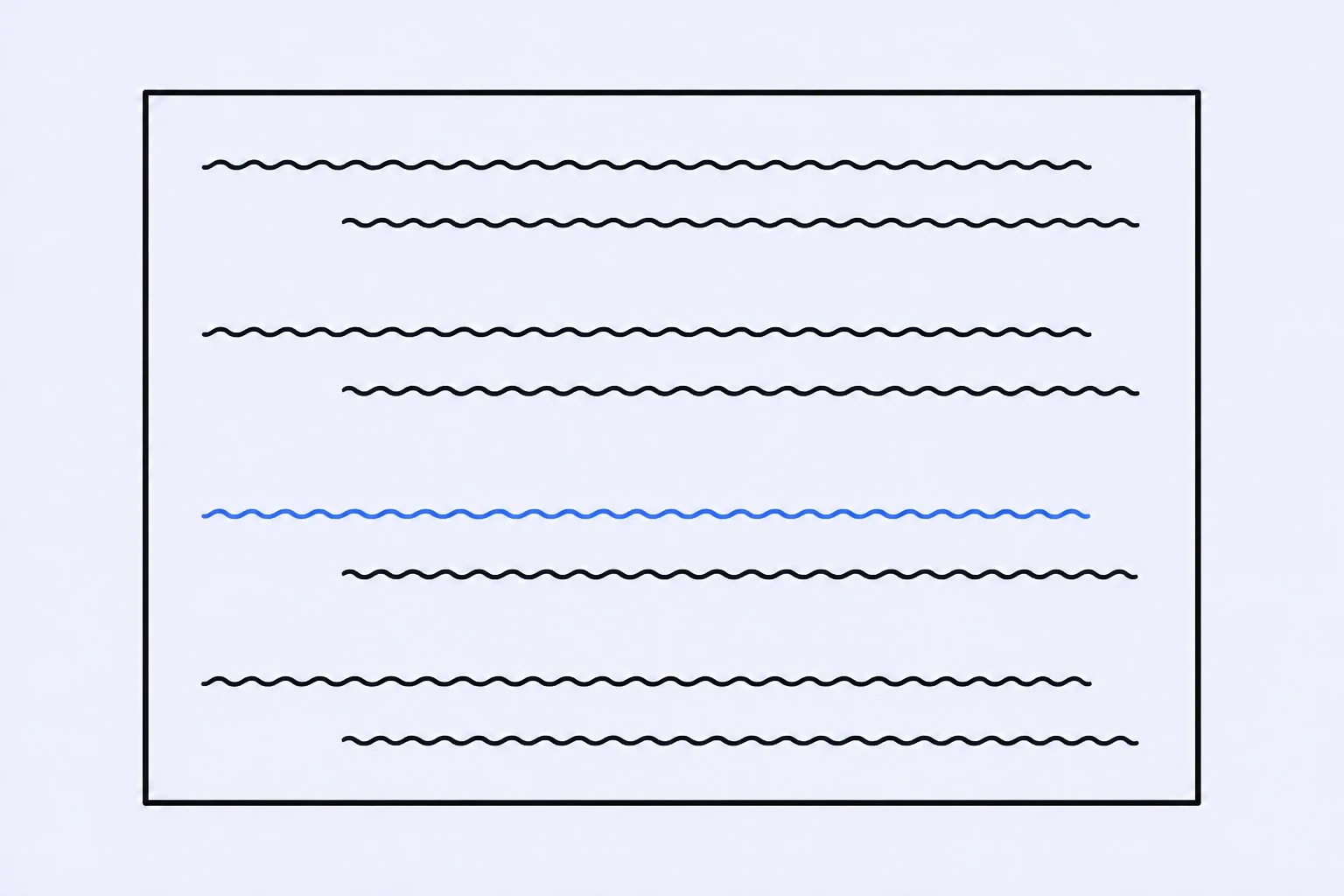
Hanging indent: First line of each entry flush left, every line after it indented half an inch. This is the format teachers check for first, and it's the one students most often get wrong.
Spacing: Double-spaced throughout, same as the rest of the paper. No extra blank lines between entries.
If you're unsure MLA is even the right style for your class, the citation style picker matches the style to your subject, since a history paper and a biology paper often want different ones.
The Mistakes That Cost Marks
Calling it a bibliography. A works cited page lists only what you cited. A bibliography lists everything you consulted. Use the one the assignment asks for.
Mixing MLA and APA. "Works Cited" with "(2021)" dates in parentheses is a mash-up of two styles. Pick one and hold it. The APA citation generator handles the other one cleanly if your class turns out to want APA.
Dropping the container. An article floating with no website or journal named is missing element three. The reader can't find it.
Wrong alphabetical order. Sort by the first word of the entry, not by the title of the article when an author exists.
Do It Faster
Formatting ten entries by hand, tracking italics and comma placement, is where the time goes and where the small deductions come from. The MLA essay formatter builds the works cited page and the in-text citations in one pass so they match. When you assemble the paper, AgentDock Editor keeps every citation in the same style as you add sources, so a source dropped in at the last minute lands in the right alphabetical spot with the right format.
FAQ
What's a works cited page? The alphabetical list of every source you cited in your paper, in MLA format, on its own page at the end.
What's the difference between works cited and a bibliography? A works cited page lists only sources you cited. A bibliography lists everything you read, cited or not. MLA uses works cited.
How do I alphabetize a works cited page? By the first word of each entry, usually the author's last name. If a source has no author, use the title, ignoring "A," "An," and "The."
Does every entry need a URL? Online sources need the URL or DOI as the location. Print books and print articles don't.
Is works cited the same as references? No. Works cited is MLA. References is APA. Same idea, different formatting rules. Use the one your class assigns.