A body paragraph makes exactly one point and spends every sentence defending it. The point goes in the topic sentence. The defense is evidence plus your analysis of it. A short wrap-up lands the point and hands off to the next paragraph.
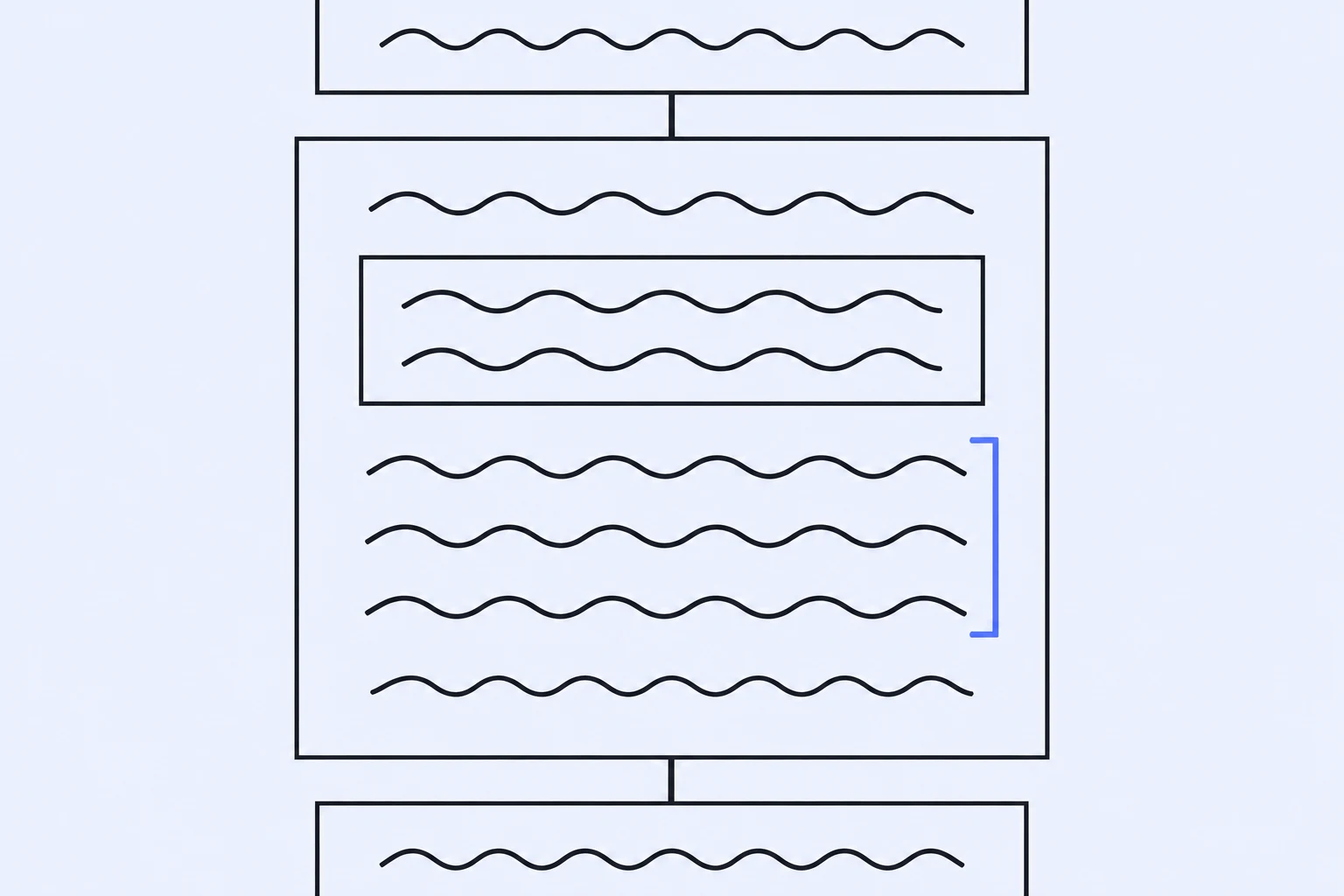
That's the anatomy behind every version of the advice. Purdue OWL packages it as TTEB: Transition, Topic sentence, Evidence and analysis, Brief wrap-up. Harvard's Writing Center compresses it further: one paragraph, one main point. Get those two rules working and the rest is assembly.
A Body Paragraph Makes Five Moves
| Move | Job | Length |
|---|---|---|
| Transition | Connect to the previous paragraph | A phrase, not a sentence |
| Topic sentence | State this paragraph's one claim | 1 sentence |
| Evidence | The quote, data, or example | 1-2 sentences |
| Analysis | Why the evidence proves the claim | 2-3 sentences |
| Wrap-up | Land the point, point forward | 1 sentence |
The proportions repeat a pattern from science class: this is claim, evidence, reasoning at essay scale, with a transition bolted on the front and a wrap-up on the back. If you've written a CER response, you already know the hard part.
- Transition move feeling clunky? The Transition Words Helper finds weak or missing connections in a draft and writes in the transition that fits.
The Topic Sentence Is a Mini-Thesis
Your topic sentence makes a claim your thesis needs proven. Not a fact, not a topic announcement. "Uniform policies affect low-income families differently" is a claim the paragraph can defend. "This paragraph is about uniform costs" announces furniture.
The test runs in both directions. Read the topic sentence against your thesis: does proving it move the argument? Read every sentence in the paragraph against the topic sentence: does it defend the claim? Sentences that fail the second test belong in a different paragraph, and a topic sentence generator turns a vague "about" sentence into an arguable one when yours keeps coming out as furniture.
Run the Evidence Cycle
The middle of the paragraph runs a cycle the University of Illinois Springfield writing center names cleanly: assertion, evidence, commentary. State a sub-point, give the proof, explain the connection.
The cycle can run twice in one paragraph. Two pieces of evidence for the same claim, each with its own commentary, is a strong paragraph. Two pieces of evidence for two different claims is two paragraphs stapled together, and it reads that way.
The commentary move is where points live and die, the same way reasoning decides a CER grade. Evidence dropped without commentary leaves the grader doing your job, and graders don't volunteer.
- Evidence landing without an introduction? The Signal Phrase Generator writes lead-ins with the right verb for each quote.
Here Is One Worked Through
One worked paragraph. The moves are labeled after it.
Thesis: districts should move high school start times later.
The paragraph:
"Beyond alertness, later start times show up directly in academic results. Districts that shifted first period saw measurable grade improvements: Seattle's 2016 shift added an average of 4.5 percent to second-semester grades in the affected schools. A half-letter-grade change from a schedule adjustment, with no curriculum change attached, is close to the cheapest academic intervention a district can buy. The gain also held across income levels, which matters for the equity case the next section takes up."
All five moves visible: the transition ("Beyond alertness"), the claim (grades rather than alertness), the evidence (Seattle, 4.5 percent), the commentary (cheapest intervention, no curriculum change), and a wrap that hands off to the next paragraph.
How Long Should It Be
Five to eight sentences. Around 100 to 200 words for most school essays. Shorter usually means the analysis is missing. Longer usually means two ideas got stapled.
The one-idea test beats counting sentences: name the paragraph's job in five words or fewer. "Proves later starts raise grades" works. "Talks about grades and also equity and the cost argument" is three paragraphs asking to be separated.
- Checking length against an assignment limit? The Word & Character Counter counts the paragraph and trims it to fit while keeping the meaning.
Three Ways Body Paragraphs Fail
The double idea. Two claims share one paragraph and neither gets a full defense. Split them.
The missing analysis. Topic sentence, evidence, end. The paragraph proves nothing because nothing connects the proof to the claim. If the paragraph feels short, the commentary is what's missing.
The orphan. A paragraph that defends its own claim perfectly, and the claim doesn't serve the thesis. Interesting is not the same as relevant. Cut it or reconnect it. Each body paragraph fills one slot in the five-part essay structure, and it has to earn that slot.
- Orphans usually trace back to a vague thesis. The Thesis Statement Generator sharpens it into one arguable sentence every paragraph can serve.
- Planning the paragraph order first? The Essay Outline Creator maps thesis, arguments, and evidence before you draft.
- Want a rubric read of the finished draft? The Essay Grader scores it and points to the paragraphs that need work.
Assemble Paragraphs Faster
Structure problems are easier to see in someone else's paragraph than your own. A body paragraph writer produces a paragraph with all five moves present, which makes a missing move in your own draft obvious by comparison, and a paragraph structure explainer labels the moves in any paragraph you paste in. Draft in the Dock Editor (free for 7 days) with your outline and evidence in the same document, so each paragraph's claim stays within sight of the thesis it serves.
Before drafting your next essay, write only the topic sentences first, one per planned paragraph, and read them as a list. If the list argues the thesis by itself, the essay works before you've written it. If it doesn't, no amount of good paragraphs will save the order they're in.