To paraphrase is to restate someone else's idea in your own words and your own sentence structure, then cite the source. Both halves matter. Change the words but keep the author's sentence shape and you have committed plagiarism, even with a citation attached.
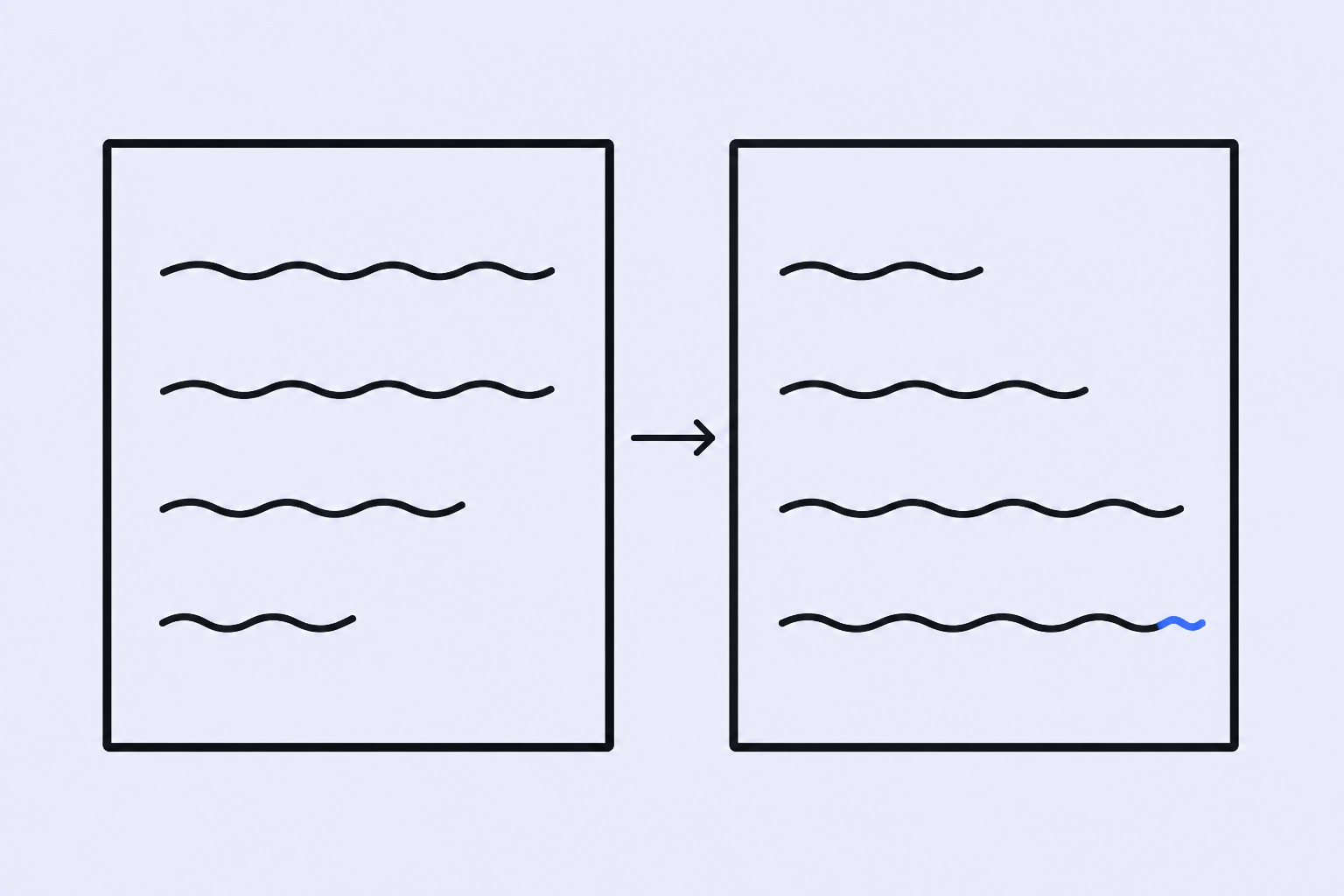
This is where honest students get caught. They swap in synonyms, keep the original sentence bone for bone, add a citation, and think they're safe. They aren't. That move has a name, patchwriting, and plagiarism checkers flag it. The Purdue OWL, the writing reference most instructors use, is blunt about it: a real paraphrase changes both the wording and the structure of the original (Purdue OWL).
Paraphrase vs Quote vs Summary
Three ways to use a source. Students pick the wrong one constantly.
| What it does | Length | When to use it | |
|---|---|---|---|
| Quote | Copies the exact words in quotation marks | The original length | The wording itself matters |
| Paraphrase | Restates one passage in your words | About the same length | You want the idea, not the phrasing |
| Summary | Condenses a long section to its main point | Much shorter | You need the gist of a lot of text |
Paraphrase and summary both use your own words. The difference is scope. A paraphrase reworks one passage at roughly the same length. A summary crushes many pages into a few sentences. For that second job, the summary writer condenses a long source to its core claim.
A Worked Example
Original source:
"The invention of the printing press did not merely speed up the copying of books. It transformed who could produce knowledge, breaking the monopoly the church and the wealthy had held over the written word."
Bad paraphrase (patchwriting, still plagiarism):
The creation of the printing press did not simply accelerate the copying of books. It changed who could create knowledge, ending the control the church and the rich had held over the written word (Author 45).
See the problem. Every phrase maps one-to-one onto the original. "Invention" became "creation," "transformed" became "changed," but the sentence walks the exact same path. A citation doesn't fix this.
Good paraphrase:
Before the printing press, knowledge stayed in the hands of two groups: the church and the rich, the only ones who could afford hand-copied books. The press broke that hold. Suddenly, producing the written word was no longer a privilege of the powerful (Author 45).
This one keeps the idea and throws out the structure. New order, new phrasing, the meaning intact, the source cited. That's a paraphrase.
The Method That Prevents Patchwriting
The reason patchwriting happens is that students paraphrase with the source open in front of them, so their sentence copies its shape. Break that with four steps.
- Read the passage until you understand it. Not the words, the point.
- Look away from the source. Close the tab. This is the step that works.
- Write the idea from memory, in your own words. Because you can't see the original, your sentence takes your shape, not the author's.
- Check it against the source, then cite. Confirm you kept the meaning and didn't accidentally copy a phrase. Add the in-text citation. The APA citation generator formats the in-text mark so the paraphrase is credited correctly.
The "look away" step is the whole trick. You can't copy a structure you aren't looking at.
Common Mistakes
Swapping synonyms and calling it done. Covered above. If your sentence and the original line up phrase for phrase, it's plagiarism no matter how many words you changed.
Forgetting the citation. A paraphrase still uses someone else's idea. No citation, and it's plagiarism even if every word is yours. Paraphrasing changes the words, not the ownership of the idea.
Paraphrasing when you should quote. If the author's exact wording is the point, a famous line, a precise legal phrase, quote it. Paraphrasing a perfect sentence into a clumsy one loses more than it protects.
Where AI Fits, and Where It Does Not
AI paraphrasing tools are everywhere, and they're a trap when used blindly. Most of them do exactly the thing that gets flagged: they swap synonyms and keep the structure, which is patchwriting at scale. The safer use is to understand the passage, write your own version, then check it. The paragraph structure explainer helps you rebuild a passage in a different shape rather than a reworded copy.
When you write the paper in AgentDock Editor, you can keep the source in one pane and write your paraphrase in another without pasting the original into your draft, which is the habit that keeps the author's structure out of your sentences.
FAQ
How do I paraphrase without plagiarizing? Read the passage, look away from it, write the idea in your own words from memory, then check it against the source and cite it. Changing both the wording and the sentence structure is what makes it a real paraphrase.
Is changing a few words enough to paraphrase? No. Swapping synonyms while keeping the original sentence structure is patchwriting, and it counts as plagiarism. You have to change the structure too.
Do I need to cite a paraphrase? Yes. A paraphrase uses someone else's idea, so it needs an in-text citation even though the words are yours.
What's the difference between paraphrasing and summarizing? Paraphrasing restates one passage at about the same length. Summarizing condenses a long section into a much shorter version. Both use your own words.
Are AI paraphrasing tools considered plagiarism? The tool isn't the problem, the output is. Most AI paraphrasers swap synonyms and keep the structure, which gets flagged. Understand the passage and write your own version, then use AI to check it, not to generate a reworded copy.