The hardest sentence in any essay is the first one. You're staring at a blank page, the deadline is real, and every opening you try sounds either boring or fake. Here's the structure that gets you past it, five hooks that work, and the two openings to retire forever.
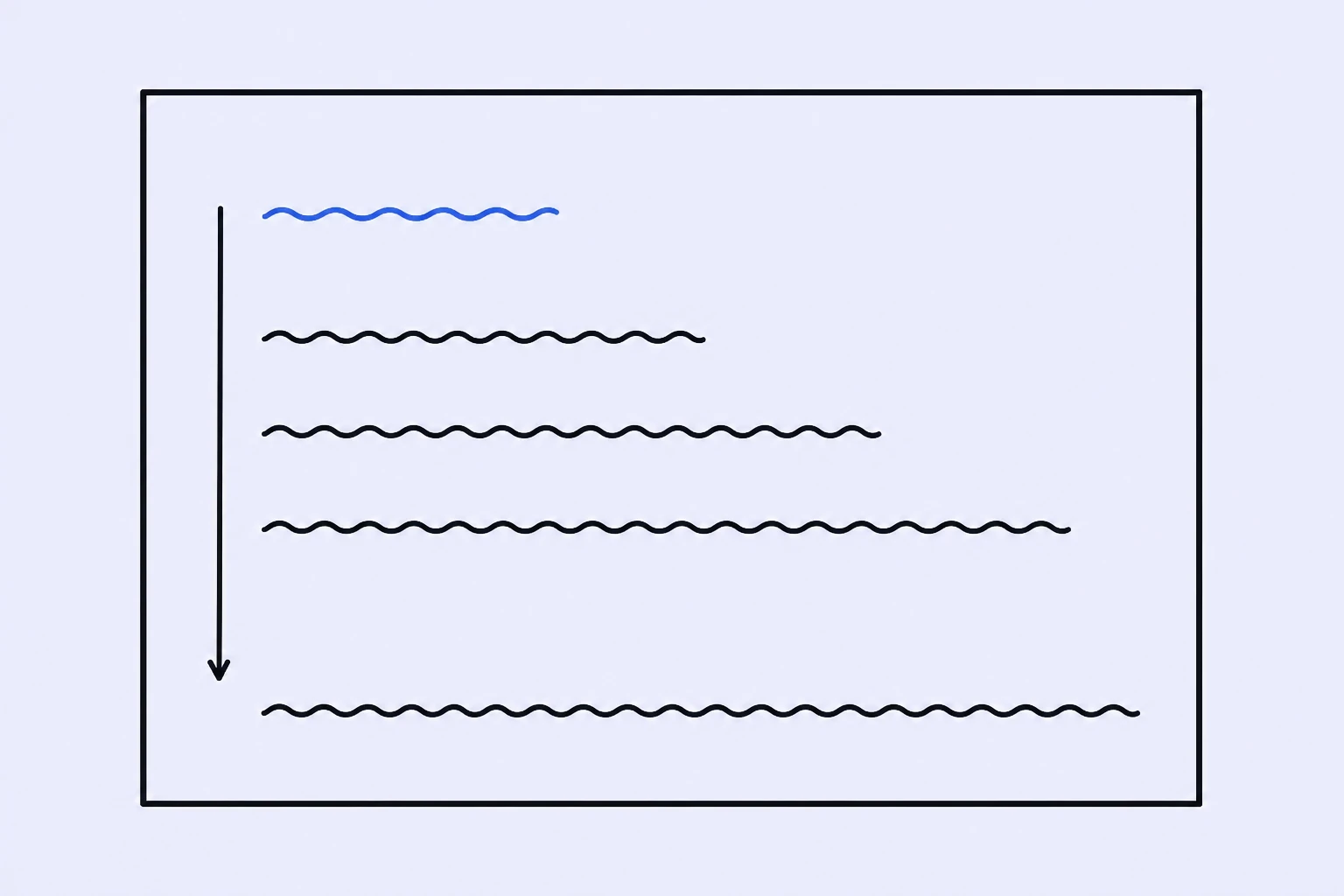
An introduction does three things: grab attention (the hook), give the reader the background they need (context), and state your argument (the thesis). The hook is the part everyone gets stuck on, so start there.
The Two Openings to Never Use Again
"Since the beginning of time, humans have..." Nobody has any idea what humans did since the beginning of time, including you. This opener says nothing and signals a student stalling.
"The dictionary defines X as..." The dictionary definition opener is the oldest tired move in student writing, and teachers have read it ten thousand times. Unless the definition is contested and your essay is about that fight, cut it.
If you have written either one, you aren't out of ideas. You're just reaching for the safest possible start. The hooks below are safer bets that don't read as filler.
Five Hooks That Work
1. The specific scene
Drop the reader into a concrete moment.
At 6:14 on a Tuesday morning, a factory in Bhopal began leaking gas that would kill more people than any industrial accident in history.
Specific time, specific place. The reader is inside the essay before they know the topic.
2. The surprising fact or number
Lead with something true that stops the reader.
A blue whale's heart is the size of a small car, and it beats twice a minute.
The fact has to connect to your argument. A random fact is a gimmick. A fact that sets up your thesis is a hook.
3. The sharp question
Not a lazy one ("Have you ever wondered about the ocean?"), a real one your essay answers.
Why does widening a highway make traffic worse?
The reader wants the answer, so they keep reading. That's the whole job of a hook.
4. The contradiction
Open on a tension your essay resolves.
The most productive thing you can do at work is often to stop working.
It sounds wrong, so the reader stays to see how you make it true.
5. The quote (used carefully)
A quote works when it's doing real work, not decorating the top of the page.
"The opposite of poverty is not wealth. The opposite of poverty is justice." Bryan Stevenson said that, and it reframes the entire debate over prison reform.
Skip the generic inspirational quote. Use one that changes how the reader sees the topic.
If none of the five are landing for your specific topic, the essay hook writer generates opening lines from your subject so you can react to a few options instead of freezing on a blank page.
After the Hook
The hook earns two or three sentences of attention. Don't waste them. Move from the hook to the context the reader needs, then land on your thesis as the last sentence of the intro. That thesis is the promise the rest of the essay keeps, and each body paragraph opens with a topic sentence tied back to it. The topic sentence generator handles those once the intro is set.
The Trick When You Are Truly Stuck
Write the intro last. The opening is hard because you're trying to introduce an argument you have not made yet. Draft the body first, discover what you argue, then come back and write the hook to fit. Half the blank-page problem is trying to start at the start.
When you draft the body first in AgentDock Editor, the intro is easier to write last, because you can see the argument you already built and open to fit it. The argumentative essay writer can rough out that body structure to react to.
FAQ
How do I start an essay introduction? Open with a hook (a scene, a fact, a question, a contradiction, or a strong quote), give the reader the context they need, then end the intro with your thesis.
What's a good hook for an essay? One that connects to your argument and makes the reader want the next sentence. A surprising number, a sharp question your essay answers, or a specific scene all work. A generic quote or "since the beginning of time" doesn't.
Should I write the introduction first or last? Last is often easier. You can't introduce an argument you have not made yet, so drafting the body first tells you what to introduce.
How long should an essay introduction be? Usually three to five sentences for a standard essay: a hook, a line or two of context, and the thesis. Longer papers get longer intros, but the shape is the same.
What should you not start an essay with? "Since the beginning of time," a dictionary definition, or a lazy rhetorical question. All three read as a student stalling for a first sentence.