An annotated bibliography is a source list where each entry gets a short paragraph underneath it. The citation, then 100 to 200 words on what the source says and whether it's any good. That paragraph is the annotation. That's the entire assignment.
Two things trip students up. The citation format, which is the same MLA or APA you already use for a works-cited page, and the annotation itself, which is the part nobody explains clearly. This covers both, with two full worked entries you can copy the shape from.
Your annotation usually does three jobs, and the Purdue OWL, the citation reference most instructors point to, names them: summarize the source, assess it, and reflect on how it fits your project (Purdue OWL). Some assignments want all three. Some want only the summary. Check the prompt before you write a word.
What an Entry Looks Like
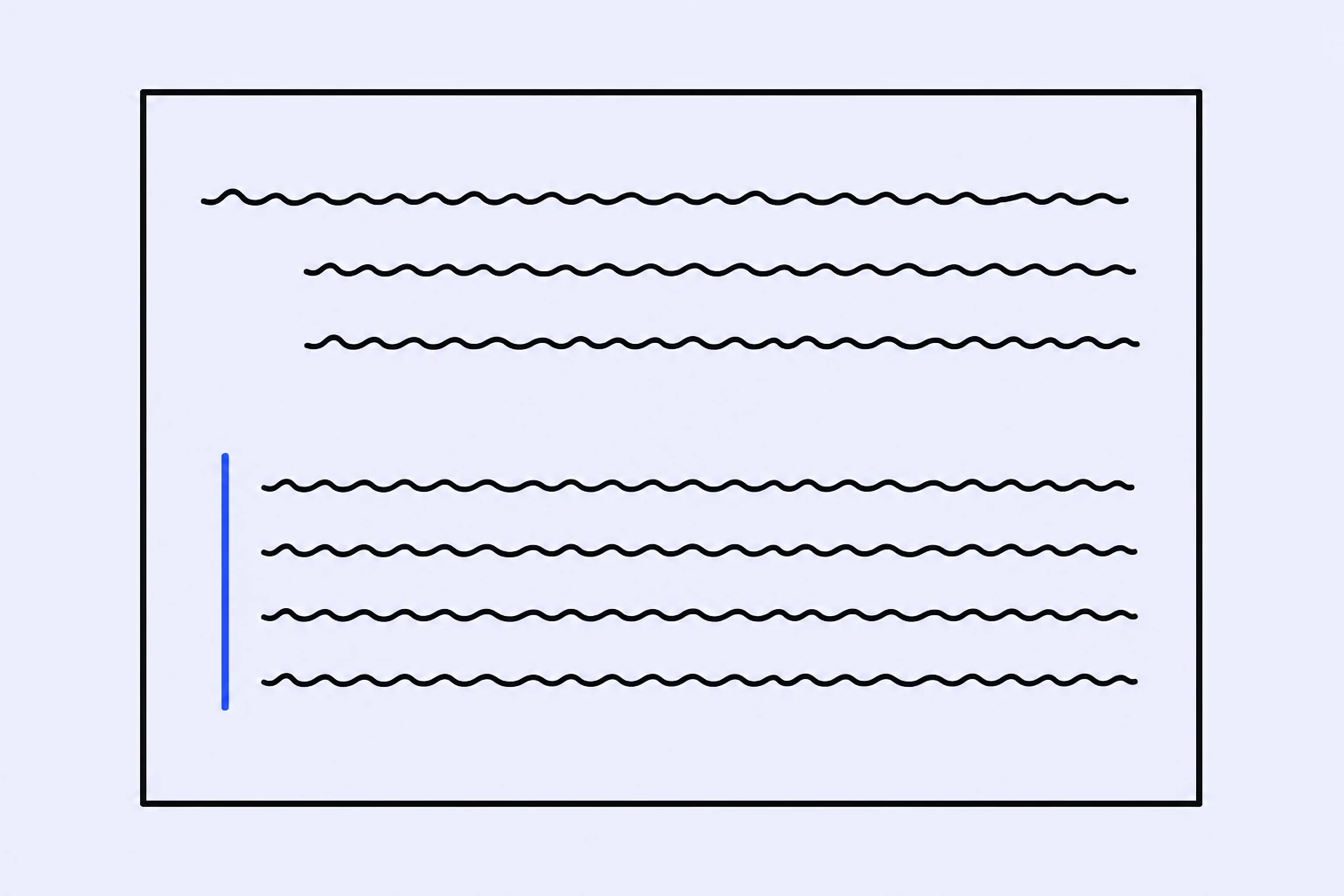
One entry is a citation plus an annotation. The citation follows your assigned style. The annotation is an indented paragraph below it.
The three kinds of annotation:
| Type | What it does | When it's assigned |
|---|---|---|
| Summary (descriptive) | States what the source argues and covers | Intro courses, early research stages |
| Evaluative (critical) | Judges the source's credibility and usefulness | Most college assignments |
| Reflective | Explains how the source fits your own project | Research papers, thesis prep |
Most college assignments want the evaluative kind, or a mix. A pure summary that never says whether the source is any good reads like a book report, and it loses points.
The Format, Part by Part
Length: 100 to 200 words per annotation. One paragraph. Some instructors want a full page per source, most want a tight paragraph. Match the prompt.
Order: Alphabetical by the author's last name, same as a works-cited or references page. No numbering.
Indentation: The citation gets a hanging indent (first line flush left, the rest indented). The annotation sits indented under the citation.
The annotation covers, in order:
- Summary, two to three sentences. What does the source argue? What evidence does it use? Stay neutral here.
- Assessment, two to three sentences. Is the author credible? Is the source current? Is it biased? How does it compare to your other sources?
- Reflection, one to two sentences. How will you use this in your paper? What does it prove for your argument?
Two Full Examples
Example 1: APA style, evaluative
Thaler, R. H., & Sunstein, C. R. (2021). Nudge: The final edition. Penguin Books.
Thaler and Sunstein argue that small changes in how choices are presented, what they call choice architecture, can steer people toward better decisions without limiting freedom. They draw on behavioral economics experiments covering retirement savings, organ donation, and health insurance. The authors are established researchers, and Thaler won the 2017 Nobel Prize in Economics, which lends the argument weight. The 2021 edition updates the original with responses to a decade of criticism, so it is current. This source anchors my section on why default settings change behavior more than information campaigns do.
Notice the shape. First two sentences summarize. The next two assess credibility and currency. The last sentence reflects on the use. That's the full pattern in about 110 words.
Example 2: MLA style, summary plus assessment
Carr, Nicholas. The Shallows: What the Internet Is Doing to Our Brains. W. W. Norton, 2020.
Carr argues that heavy internet use rewires the brain for skimming and against deep, sustained reading. He builds the case from neuroscience studies on plasticity and from a history of reading technologies, from the printed book to the hyperlink. The neuroscience is a decade old now, which is a limitation for a fast-moving field. Carr is a journalist, not a scientist, so he synthesizes rather than runs original research. The book is still useful for my paper as a clear statement of the "attention loss" position that my other sources push back against.
Same three moves. The assessment here's sharper, naming a real limitation (aging research, author is a journalist) instead of praising the source blindly. Instructors reward that.
How to Write the Annotation in Four Steps
- Read the source and write the citation first. Get the citation right before you touch the annotation. If your style is APA, the APA citation generator formats the entry so you aren't fighting comma placement at midnight.
- Summarize in two sentences, no opinion. What does it argue? What's the evidence? If you can't summarize it in two sentences, reread it. The summary writer can squeeze a long article into a neutral paragraph you then trim.
- Assess it. Who wrote it, when, and can you trust it? Name one strength and one limitation. A source with no limitations usually means you didn't look hard enough.
- Reflect in one sentence. Where does this go in your paper? If a source doesn't fit anywhere, cut it from the bibliography.
Common Mistakes That Cost Points
Summarizing without assessing. The most common one. A paragraph that only says what the source is about, with no judgment, is a summary, not an annotation. Add the "is it any good" part.
Copying the abstract. The abstract is the author's pitch for their own work. Your annotation is your read on it. Graders who have seen the abstract will spot a reworded copy.
Inconsistent citation style. Half APA, half MLA is an instant deduction. Pick the assigned style and hold it across every entry. If you're unsure which one the class uses, the citation style picker matches the style to your subject.
Wrong length. Three sentences is thin. Three hundred words is a mini-essay. Land at 100 to 200 unless the prompt says otherwise.
The Faster Way to Build the Whole Thing
The mechanical part, formatting ten citations and drafting ten annotations, is where the hours go. The annotated bibliography generator takes your sources, formats each citation in your style, and drafts the summary-assess-reflect paragraph so you edit instead of starting from a blank page. It gets you a first version. Your job is the assessment, because the tool can't judge how a source fits an argument only you have read.
When you assemble the final document, AgentDock Editor holds the draft and your edits together and keeps every citation in one consistent style as you reorder entries, so the alphabetical list stays clean when you add a source at the last minute.
FAQ
What's an annotated bibliography in simple terms? A list of your sources where each one has a short paragraph under it. The paragraph says what the source is about and whether it's any good for your paper.
How long is each annotation? Usually 100 to 200 words, one paragraph. Some instructors want more. Follow the assignment prompt over any general rule.
What's the difference between a summary and an evaluative annotation? A summary annotation only says what the source covers. An evaluative one also judges the source's credibility, currency, and usefulness. Most college assignments want the evaluative kind.
Do I put them in alphabetical order? Yes. Alphabetical by the author's last name, same as a works-cited or references page. No numbers.
Can I use AI to write an annotated bibliography? AI can format the citations and draft the summary paragraphs, which saves the mechanical time. It can't judge how a source fits your specific argument, since that depends on the paper only you're writing. Draft with it, then write the assessment yourself.
What style should I use, APA or MLA? Whichever the assignment specifies. APA is common in the sciences and social sciences. MLA is common in the humanities. If the prompt doesn't say, ask, since switching later means reformatting every entry.