Textual evidence is proof pulled from the text itself: a quote, a paraphrase, a summary, or a specific detail that backs your claim. Finding it is the easy half. The graded half is what you do after: connecting the evidence to your argument in your own words.
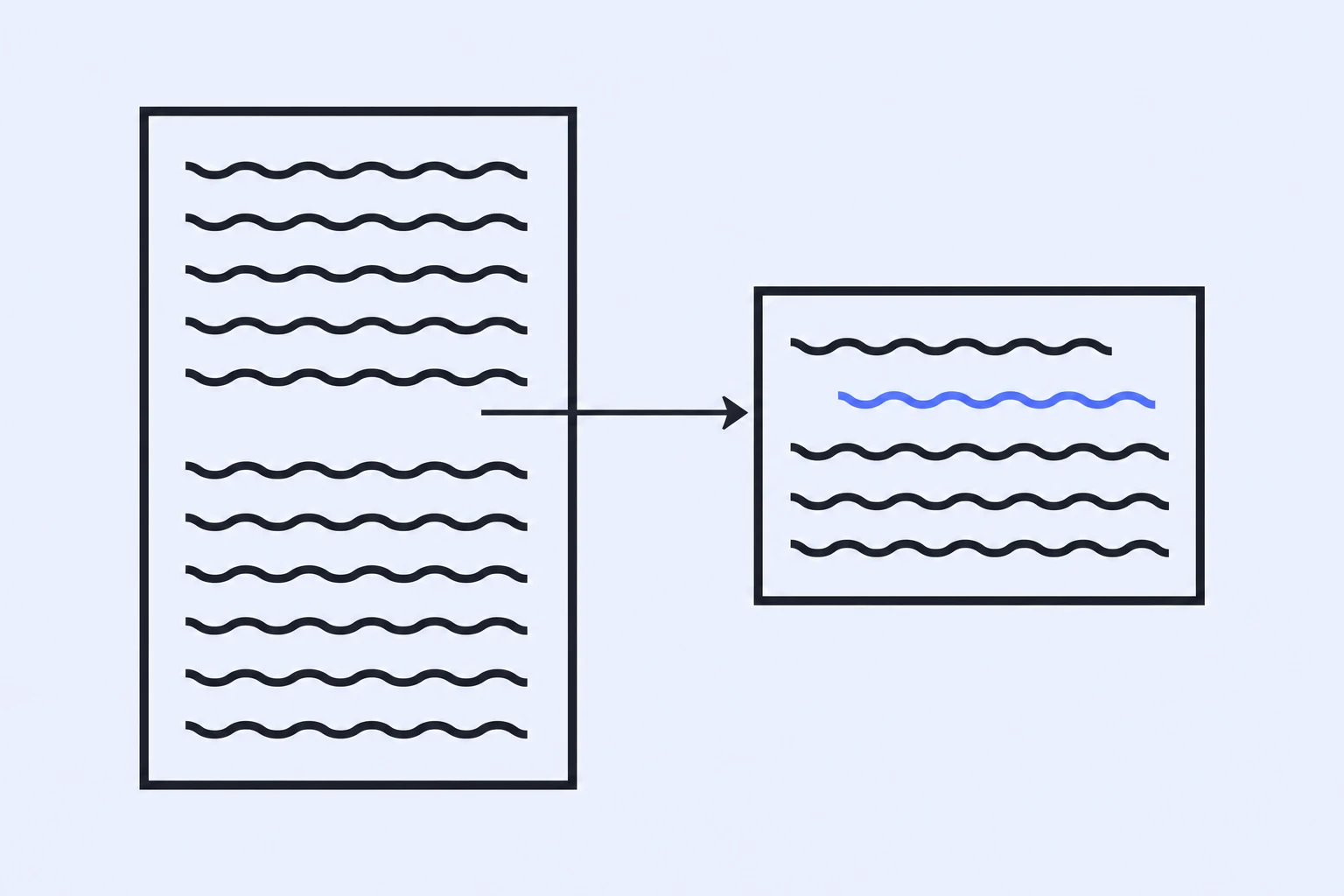
That second half is written into the standards. Common Core RL.6.1 starts requiring students to "cite textual evidence to support analysis" in sixth grade, and the SAT built an entire question type around it. Teachers call the failure mode the dropped quote: evidence pasted in, nothing said about it, points gone.
The Four Types of Textual Evidence
Four forms. Pick by the job the evidence has to do, not by habit.
| Type | What it is | Use it when |
|---|---|---|
| Direct quotation | The author's exact words in quotation marks | The wording itself is the point |
| Paraphrase | A specific passage restated in your words | The idea matters, the phrasing doesn't |
| Summary | A whole section compressed to its point | You need broad support, fast |
| Specific detail | A fact, number, or event from the text | One concrete data point does the work |
Quoting is the strongest form and the most abused. If the author's phrasing isn't doing work a paraphrase can't, paraphrase. Essays that are 40 percent quotation read like a collage, and graders notice whose words are missing: yours.
- Leaning too hard on quotes? The Paraphrase Tool restates a passage in new words while keeping its meaning, so you can check your own paraphrase against it.
How to Find It
Read with the claim in your hand. Hunting for evidence before you have a working claim produces highlighter soup: half the chapter marked, none of it usable.
The working method:
- Write your claim first, even rough. "Curley's wife is lonely, not cruel" is enough to hunt with.
- Ask "says who?" of the claim. Every answer the text gives you is candidate evidence.
- Mark candidates with the page number the moment you find them. Losing the page costs more time later than marking it costs now.
- Keep the three strongest. One quote, one paraphrase, one detail is a healthier mix than three quotes.
The "says who?" test also runs in reverse. Any sentence in your draft that would make a reader ask it needs evidence behind it.
- Not sure what to mark on a first read? The Text Annotation Guide shows a model annotation of a passage and explains what to flag and why.
- Arguing about a character? The Character Quote Collector gathers a character's defining quotes with chapter references and a line of context for each.
The Quote Sandwich
Evidence never stands alone. Every piece gets three moves. Introduce it, cite it, and then explain it at more length than either. Writing centers call this the quote sandwich, and it's the fix for the dropped quote.
Here's one, assembled:
Introduce: Steinbeck signals her isolation before she speaks. Cite: "Both men glanced up, for the rectangle of sunshine in the doorway was cut off" (Steinbeck 31). Explain: The light literally leaves the room when she enters. The men read her as a shadow, which is the loneliness the claim is about.
The explain move should be the longest of the three. If your explanation is shorter than your quote, the quote is doing your thinking for you. It's the same job the reasoning step does in claim, evidence, reasoning.
- Want to see the sandwich across a whole essay? The Literary Analysis Essay Writer drafts an interpretive essay built on close reading and integrated textual evidence.
Signal Phrases: The Introduce Move
A signal phrase names the source and frames the evidence before it lands:
- Steinbeck describes...
- The author argues...
- According to the passage,...
- The narrator admits...
- The data in paragraph 4 show...
Swap the verb to match the evidence. "Argues" for a claim, "describes" for imagery, "concedes" for an admission against interest. A signal phrase generator builds these with the right verb for the job when every sentence in your draft has started with "The quote shows."
How to Cite It
Two formats cover most school essays. The in-text citation rules:
- MLA: author and page in parentheses. (Steinbeck 31)
- APA: author, year, page. (Steinbeck, 1937, p. 31)
- Long quotes go block. More than four lines in MLA or 40 words in APA gets indented as a freestanding block, no quotation marks.
Format is where careless points die. An in-text citation generator formats author-page pairs correctly, and a block quote formatter handles the indentation rules when a quote crosses the threshold.
- Not told which format to use? The Citation Style Picker identifies the style your field or assignment expects and compares APA, MLA, and Chicago side by side.
- Unsure whether the period goes inside the quotation marks? The Quotation Marks Punctuation Explainer checks your sentence and explains where each mark belongs.
The Two Mistakes That Cost Points
The dropped quote. Evidence appears, paragraph ends. The grader was waiting for the explain move, and it never came. Fix: after every quote, write one sentence starting with the claim word it supports.
The collage essay. Quote, quote, quote, thin connective tissue. The rubric line "demonstrates analysis" means your words carry the argument and the evidence visits. Cap direct quotation near 20 percent of the essay and paraphrase the rest.
Building the Evidence File
Collecting evidence and writing with it are different jobs, and mixing them is slow. Do a marking pass first, then draft in the Dock Editor (free for 7 days), where quotes, page numbers, and citations live in the same document as the draft, so the cite move never means re-finding the page.
Next time you're assigned an essay, build the evidence file before writing a single body paragraph. Three strong pieces chosen against your claim beat ten highlights chosen on vibes, and the essay assembles itself around them.