A thesis statement is one sentence that says what your essay argues and why. It sits at the end of your introduction, usually the last line. Everything after it exists to prove it.
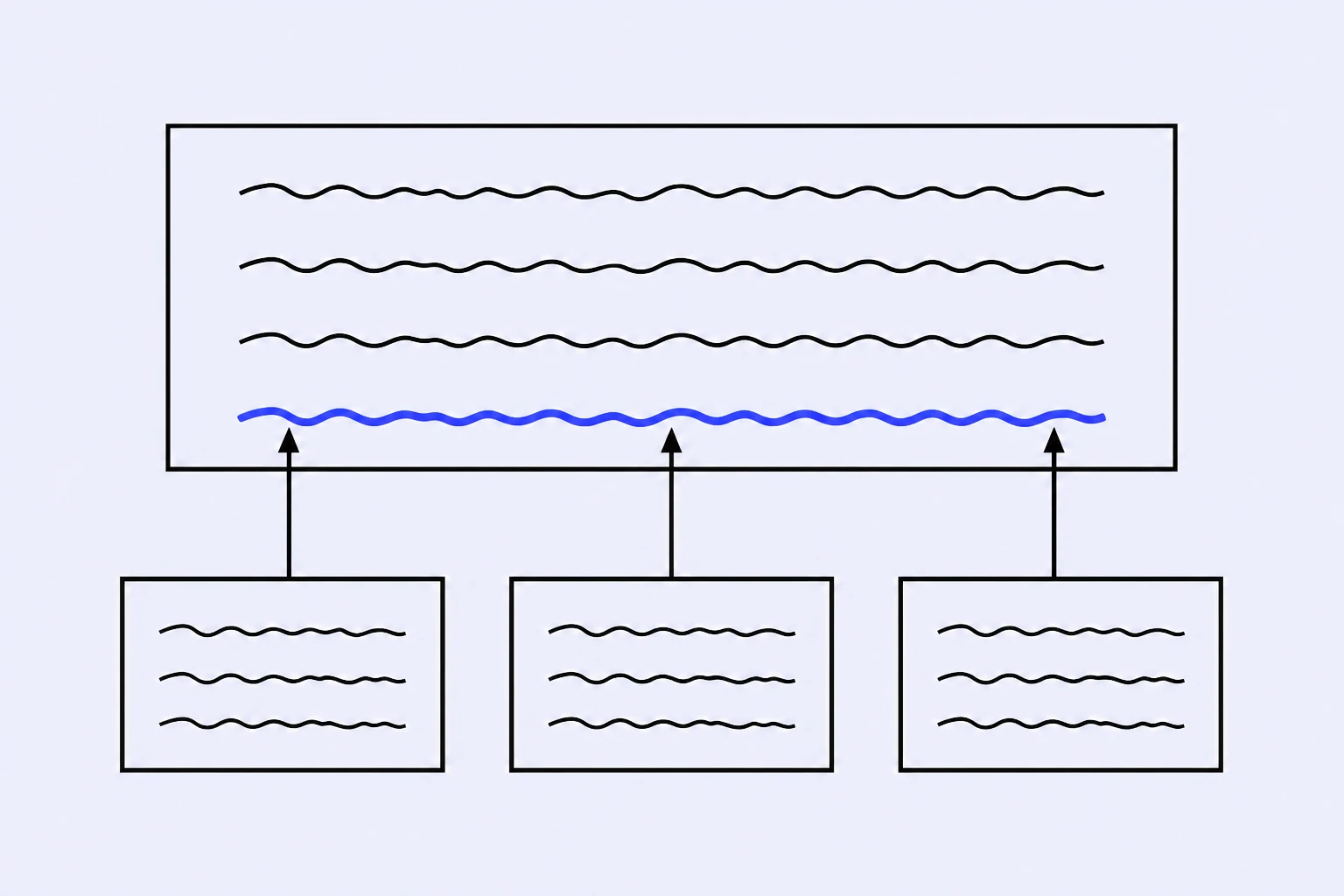
Here's the test that separates a real thesis from a fake one: someone has to be able to disagree with it. "Social media affects teenagers" is a topic, not a thesis, because nobody argues the opposite. "Schools should ban phones during class because the distraction costs more than the access is worth" is a thesis, because a reasonable person could push back. That arguable-claim rule is what writing centers like the Purdue OWL use to define a thesis in the first place.
Below are 12 examples across the essay types you get assigned, each shown weak first, then fixed.
Every Strong Thesis Follows One Formula
Specific topic + your claim + the reason or roadmap. That's the whole shape.
Standardized testing (topic) narrows what teachers can teach (claim) because it rewards memorization over the analysis students need for college (reason).
Cut any of the three and it collapses. No topic, and it floats. No claim, and it's a summary. No reason, and the reader has no idea where the essay goes.
Examples for Argumentative Essays
The argumentative thesis takes a side. A grader should know your position from this one sentence.
Weak: There are pros and cons to remote work. Why it fails: It refuses to take a side. "Pros and cons" is the sound of a student avoiding an argument.
Strong: Remote work benefits companies more than employees, because the savings are real and immediate while the isolation costs show up slowly and get ignored.
Weak: College athletes should be paid. Why it fails: It's arguable, but flat. No reason, no scope.
Strong: College athletes should draw a salary, not only a tuition waiver, because the NCAA earns billions from their work while capping what they can keep.
If you have the position but can't find the reason, the argumentative essay writer drafts the claim-and-reason structure from your topic so you can react to a version instead of staring at a blank line.
Examples for Analytical Essays
An analytical thesis makes a claim about how or why something works, not whether it's good or bad.
Weak: The Great Gatsby is about the American Dream. Why it fails: That's the topic. It analyzes nothing.
Strong: In The Great Gatsby, Fitzgerald uses the green light to show that the American Dream survives on distance, because Gatsby wants Daisy most when she is furthest away.
Weak: The author uses imagery in the poem. Why it fails: Every poem uses imagery. This says nothing specific.
Strong: The poem's water imagery tracks the speaker's grief, moving from still ponds in the opening to a flood by the final stanza.
Examples for Compare and Contrast Essays
A compare-contrast thesis names what the comparison reveals. Comparing two things without a point is a list, not an essay.
Weak: Cats and dogs are both popular pets with differences.
Strong: Cats suit apartment life better than dogs, because their independence matches a schedule that keeps their owner out of the house ten hours a day.
Examples for Expository Essays
An expository thesis explains rather than argues, but it still needs a controlling idea, not merely a subject.
Weak: This essay will explain photosynthesis. Why it fails: It announces instead of stating. Cut "this essay will explain" from every thesis you ever write.
Strong: Photosynthesis turns sunlight into stored energy through two linked stages, the light reactions and the Calvin cycle, each feeding the next.
Three Mistakes That Sink a Thesis
The statement of fact. "The Civil War ended in 1865." True, and unarguable, so there's nothing to write. If nobody can disagree, it isn't a thesis.
The announcement. "In this paper, I will discuss the causes of the French Revolution." Delete the announcement and state the causes. "Three pressures broke the French monarchy: debt, hunger, and a king who would not bend."
Too broad to prove. "Technology has changed society." You can't prove that in five paragraphs. Narrow it until the claim fits the assignment. One technology, one effect, one group.
Turn the Thesis Into a Draft
Once the thesis holds, the rest of the essay is built to support it. Each body paragraph takes one part of your claim and proves it, and it opens with a topic sentence that ties back to the thesis. The topic sentence generator turns each supporting point into an opening line, and the body paragraph writer structures the evidence underneath it.
AI is useful for the shape here and weak on the substance. It can draft a thesis that sounds right, but it doesn't know which claim your evidence supports, because it has not read your sources. Use it to test a version, then rewrite the claim in your own words. When you build the full essay out, AgentDock Editor keeps the thesis in view while you draft the body, so every paragraph stays tied to the one sentence it's supposed to prove.
FAQ
What's a thesis statement in one sentence? The one sentence in your introduction that states what your whole essay argues and why. It comes at the end of the intro and the rest of the essay proves it.
Where does the thesis go? At the end of your introduction, usually the last sentence. The intro leads up to it, the body proves it.
What makes a strong thesis statement? It makes a claim someone could reasonably disagree with, it's specific enough to prove in your page limit, and it gives a reason or a roadmap. If nobody can argue against it, rewrite it.
How long should a thesis be? One sentence in most cases. Two if the argument needs it. If it runs three sentences, you're writing the essay in the intro.
Can a thesis be a question? No. A question sets up a thesis, it isn't one. "Should phones be banned in schools?" is the question. Your answer to it's the thesis.