A topic sentence states the one point a paragraph is going to prove. It's usually the first sentence. Everything else in that paragraph is evidence for it. If a paragraph were a mini-essay, the topic sentence would be its thesis.
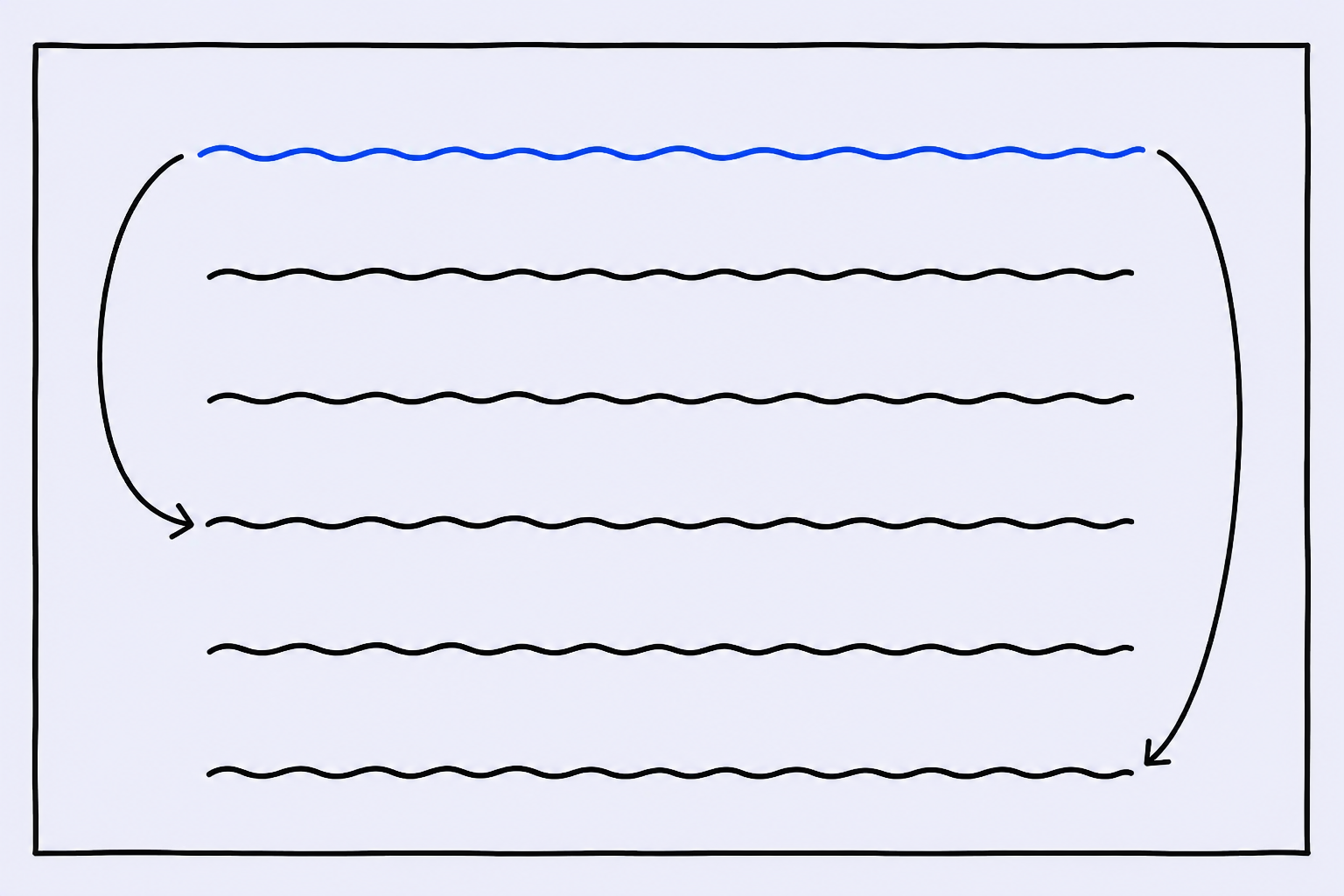
Here's the job it does, and why teachers grade for it. A reader should be able to read only your topic sentences, skip every paragraph body, and still follow your whole argument. That's the test. If your topic sentences don't tell the story on their own, they aren't doing their job.
The idea underneath it's paragraph unity: one paragraph, one point. The topic sentence names that point up front so the reader knows what the next few sentences are for.
Where It Goes
First sentence, in almost every case. Readers expect the point at the top, then the support. State the claim, then prove it.
There's one exception. Sometimes you lead with a piece of evidence or a transition, and the topic sentence comes second. That's fine when the first sentence is bridging from the last paragraph. But if you're a developing writer, put it first every time until the instinct is automatic.
Weak vs Strong Topic Sentences
Weak: There are many reasons the Roman Empire fell. Why it fails: It promises reasons but names none. The paragraph could go anywhere, which means the reader is lost until the middle of it. Strong: The Roman Empire's overreliance on enslaved labor left it unable to adapt when conquest slowed and the supply dried up.
Weak: Next, I will talk about photosynthesis. Why it fails: It announces a topic instead of making a point. Cut every "next I will talk about" you ever write. Strong: Photosynthesis depends on light not for warmth but as the actual energy the plant stores in sugar.
Weak: Social media is bad. Why it fails: Too broad and too vague. "Bad" how? For whom? Strong: Constant notifications train the teenage brain to break its own focus, which shows up as shorter attention spans in the classroom.
Notice the pattern. Every strong version names a specific claim the rest of the paragraph can prove. The weak ones name a subject and stop.
How to Write One
Take the point that paragraph needs to make and say it in one sentence, specific enough that the reader knows exactly what evidence is coming. If your essay has a thesis, each topic sentence should tie one piece of that thesis to the paragraph proving it.
The topic sentence generator turns a supporting point into an opening line when you know what the paragraph is about but can't phrase the claim. Once the topic sentence holds, the body paragraph writer structures the evidence and the paragraph structure explainer shows how the support and the closing sentence fit under it.
Topic Sentence vs Thesis Statement
Students mix these up. The difference is scope.
| Thesis statement | Topic sentence | |
|---|---|---|
| Covers | The whole essay | One paragraph |
| Location | End of the introduction | Start of a body paragraph |
| Number | One per essay | One per body paragraph |
| Job | States the whole argument | States one part of it |
Your thesis is the promise. Your topic sentences are the installments that pay it off, one paragraph at a time.
Common Mistakes
Making it a fact instead of a claim. "The Great Depression started in 1929" is a fact. The paragraph has nowhere to go. "The 1929 crash exposed how little protected ordinary savers" is a claim the paragraph can prove.
Stuffing two points into one. If your topic sentence has an "and" joining two different claims, the paragraph will try to prove both and prove neither. Split it into two paragraphs.
Forgetting the transition. A topic sentence often does double duty, connecting back to the last paragraph while introducing the new point. When paragraphs feel choppy, this is usually what's missing. The transition words helper finds the connector.
When you draft in AgentDock Editor, read only your topic sentences top to bottom before you hand the essay in. If they don't tell the argument on their own, you found your weak paragraphs before your teacher did.
FAQ
What's a topic sentence in simple terms? The sentence that tells the reader the one point a paragraph will make. Usually the first sentence, with the rest of the paragraph as proof.
Where should a topic sentence go? First sentence of the paragraph in most cases. Occasionally second, when the first sentence bridges from the previous paragraph.
What's the difference between a topic sentence and a thesis? The thesis covers the whole essay and sits in the intro. A topic sentence covers one paragraph and sits at its start. One thesis, many topic sentences.
Can a paragraph have two topic sentences? No. One paragraph, one point. If you have two claims, you have two paragraphs.
How do I know if my topic sentence is strong? Read only your topic sentences, skipping the bodies. If they still tell your argument, they're strong. If the argument disappears, they're too vague.